

Forget what you’ve heard about bland Dutch food. From crispy bitterballen to authentic Indonesian dishes, I’m about to show you traditional Dutch flavors that will completely change your mind.
I’ll be first to admit – when you open a typical Dutch lunch box you’ll find two slices of bread with exactly one piece of cheese. When I first traveled to America, I ordered what I thought was a simple sandwich at a New York deli. This thing arrived stacked so high I was genuinely confused about how to eat it without making a fool of myself.
But stick with me, because I’m about to prove that Dutch cuisine has some absolute gems worth seeking out.

Table of Contents
Let’s Start Here: The Big 9 Dutch Traditional Foods You Can’t Miss
But we need to start somewhere, so let’s start with the top 9 foods I think everyone needs to try when they visit Amsterdam.
1. Bitterballen – Trust Me On This One
Every Dutch person will tell you to try these, and we’re all right. These little crispy balls filled with beef ragout are what we order when we’re having drinks with friends.
But be warned – they can be molten hot inside. Watch a Dutch person eat one first. We all do this little dance: wait, blow on it, tiny test bite, then go for it.

Where to get them: Literally any brown café in Amsterdam. They’ll run you about €4-6 for six pieces. Bitterballen always come with mustard for dipping (a match made in heaven). Today most places offer exciting vegetarian alternatives with mushroom, or cheese fillings. But know they’re almost never vegan!
There are many food tours in Amsterdam. But I like this Secret Amsterdam Food Tour. They do it very well, and you get a great sample of Dutch flavors, including Bitterballen.
Great Amsterdam Food Tour
This small-group tour hits all the spots I recommend – from traditional poffertjes to stamppot in a historic brown café.
Book This Food Tour2. Fresh Stroopwafels – The Real Thing
Stroopwafels from outdoor markets are completely different from the packaged versions. You want them fresh and warm – the caramel center should be gooey, the waffle crispy. The Albert Cuyp market has some great stalls. My favorite: Rudy’s. Get the plain one if you want to be local, they’re the best. The dressed up waffles are for tourists.

If you buy packaged from a store check the ingredients for “Roomboter” (real butter). The difference in taste is incredible. I’m almost 100% certain the ones you can buy at home do not contain butter!
If you want to really understand what makes a good stroopwafel, there’s a hands-on Stroopwafel making workshop where you make them from scratch. It’s 45 minutes, costs about €25, and you get to eat your creations while they’re still warm.
? Workshop Experience
Make Your Own Fresh Stroopwafels
Learn the process of making your own stroopwafel and eat them warm – just €25 for 45 minutes of hands-on fun.
Reserve Your Stroopwafel Workshop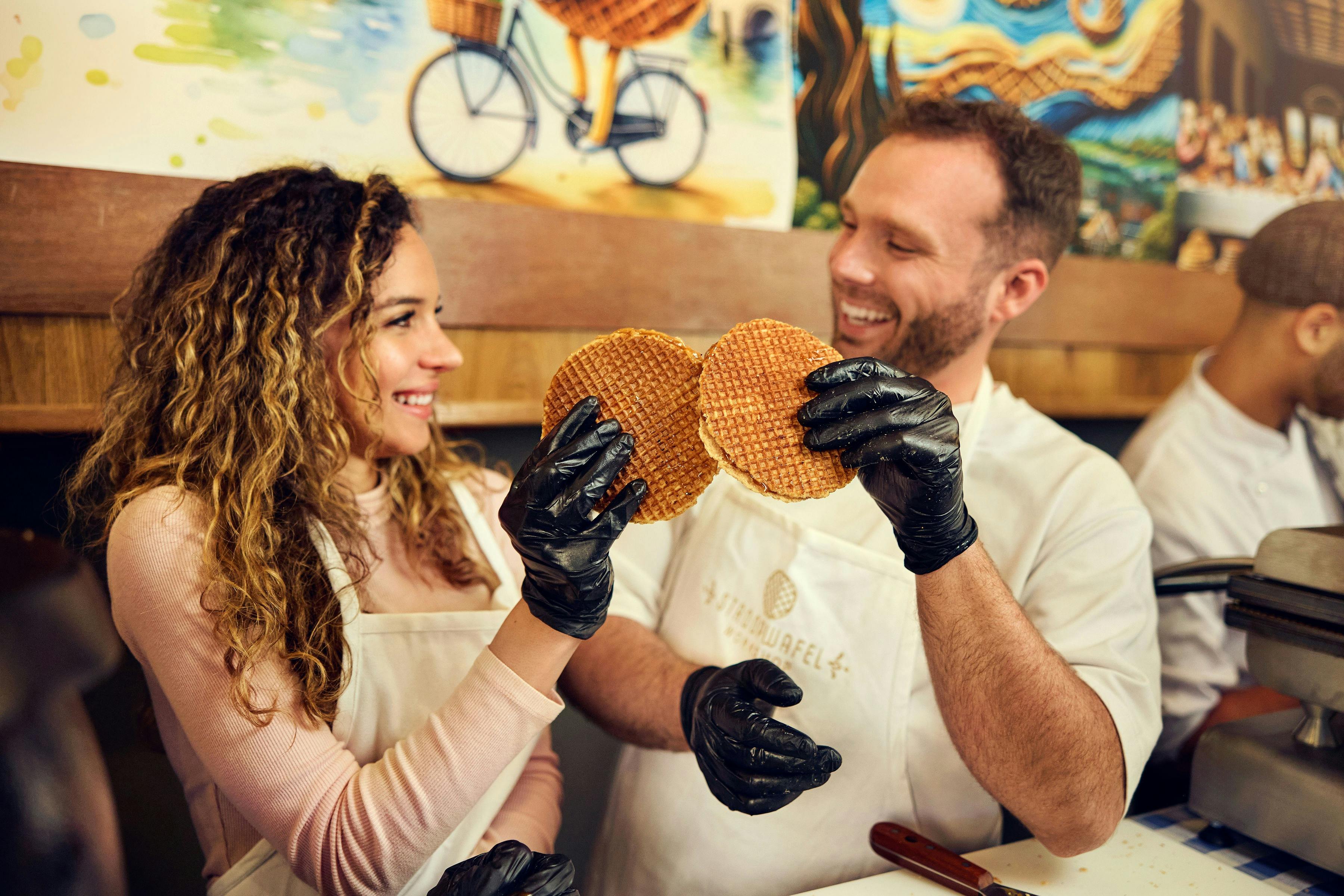
3. Stamppot – Our Ultimate Comfort Food
Okay, this one might sounds boring. Mashed potatoes with vegetables and smoked sausage. But when it’s done right? It’s like a warm hug from your Dutch grandmother. My personal favorite is the endive version. Raw endive mixed into creamy mashed potatoes with hot bacon bits straight from the pan – fat drippings and all. It’s indulgent, and it’s absolutely perfect on a cold day.

Best place to try it: The Pantry in Amsterdam. You’ll need reservations though – this tiny place books up all the time!
4. Indonesian Food (Why Indonesian Food Feels Dutch)
This might surprise you, but Indonesian food is genuinely Dutch cuisine now. Our colonial history was complicated, but it brought flavors that are now part of who we are. Nasi Goreng feels as Dutch to us as stamppot. But the best thing to eat is “Rijsttafel” – you get small portions of everything, so no FOMO and it’s so delicious!
You find the best Indonesian food in The Hague, but Max in the Jordaan area in Amsterdam is also a great place to try it.
5. Let’s Talk Pancakes
Dutch pancakes are genuinely Dutch. They’re not breakfast food either. This always confuses visitors, but we eat them for lunch or early dinner, and they’re thin like crepes but more substantial.
What makes them distinctly ours is how we serve them, with the enormous variety of toppings (both sweet and savory), and no matter what, always syrup and powdered sugar on top. My favorite version: bacon (not ham) and cheese, then powdered sugar and thick syrup on top. Sounds weird? Maybe, but it’s delicious and purely Dutch ?.

You order like you know what you’re doing. The list of options is enormous, it’s like ordering breakfast in the US.
If you’re really hungry or when it’s dinner time, go for one of the specials. They’ll have names like “The Mexican” or “The American” and they’re basically pancake burritos. You’ve never had pancakes like this before.
Here are few very different ways to eat them when you’re in Amsterdam. There are many more, but these are good, and really fun:
- Have them in a great looking pancake restaurant near Central Station. If you book your pancake here in advance, you pay less.
- Unlimited Pancakes Boat Cruise in Amsterdam Noord – great for kids and adults. Because you dress your own pancakes.
- Take it up a notch with a pancake workshop in a classic Amsterdam canal house – make them with a fantastic local host.
? Workshop Experience
Learn traditional recipes with a fantastic local host, enjoy lunch with canal views, and experience how Amsterdam locals actually live.
Reserve Your Pancake Workshop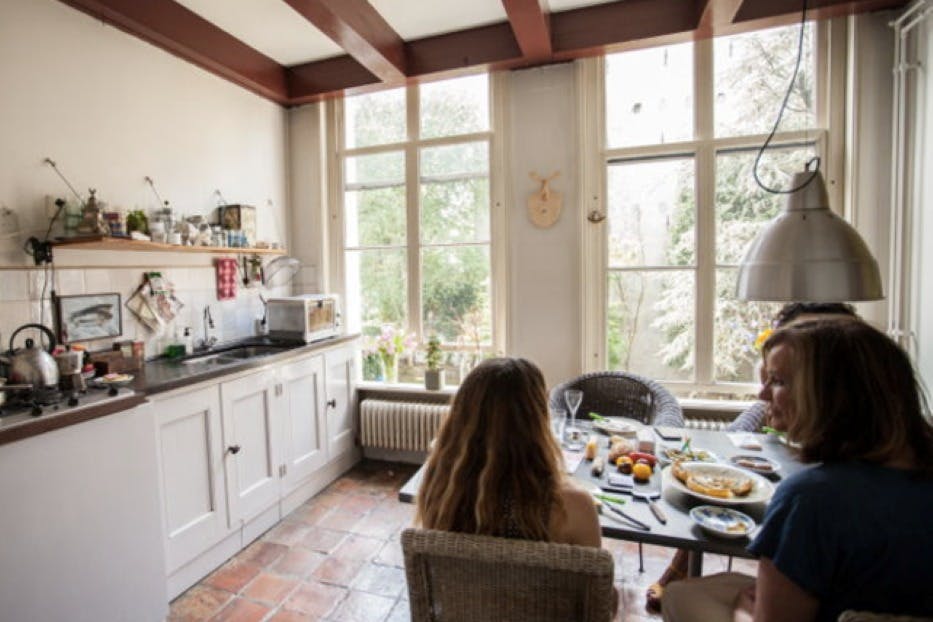
6. Getting Real Dutch Cheese (Warning)
We’re famous for cheese, obviously. But here’s what drives me crazy – tourists always end up at those Henri Willig stores selling “coconut cheese.” Coconut cheese! It’s not even remotely Dutch. These stores might look local, but they’re just there for tourists.
You want authentic cheese? Hit the weekly markets or find a proper cheese shop. Some great truly local shops in Amsterdam are: Fa. H. Wegewijs on Rozengracht, Kaasland on Singel, or De Kaaskamer on Runstraat part of the lovely the 9 Streets shopping area.

Try aged Gouda (we call it “Oud”), classic Belegen, or if you’re feeling adventurous, cumin cheese. That last one is my personal favorite.
7. Our Love Affair with Fried Food
Everything gets fried here, although it might feel that way. And before you judge us, ours is a tad more healthy. Did you know our McDonald’s fries have five ingredients. Across the pond, the ‘same’ fries have nineteen.
Here are some classics you should try:
- Kroket – crispy outside, creamy ragout inside (think large bitterbal). The classic is beef (rundvlees), but you’ll find many flavors.
- Frikandel (it’s a sausage, just go with it, don’t ask too many questions on ingredients, it tastes amazing)
- Kaassoufflé (molten cheese in pastry – dangerously hot, but worth it)
The most fun way to buy these are from an “Automatiek” – it’s like a vending machine wall with little windows filled with hot snacks ready to eat. You pay, open a door, grab your snack. Very Dutch. FEBO is the largest chain in Amsterdam. A local institution.

Fries Done Right
Here’s a tourist trap alert: the fries shops on Damrak are hyped on TikTok, and blogs, but I am pretty sure the stores encouraged this. I know there’s always a line, but it’s just not the best advice that got copied too many times on travel blogs.
Instead locals go to Vlaams Friteshuis Vleminckx (Voetboogstraat). They actually win awards. Get real Dutch or Belgium mayo – it’s creamier than what you’re used to. Or try “Patatje Oorlog” (war fries) – mayo, peanut sauce, and onions. Sounds crazy, tastes amazing.
When I first traveled to America, I ordered fries and they came with ketchup. Ketchup! I was so confused. Where was the mayo? The peanut sauce? It was like someone forgot half the meal. Honestly, ketchup…
PS: Fabel Friet on Runstraat is also hyped. But they are actually – really – good. So that’s a great place too for more fancy fries.
8. Definitely Try Surinamese Flavors Too
Surinamese food is another colonial legacy that’s become authentically Dutch. Try Surinamese roti (flatbread with curry) or pom (a casserole with chicken and root vegetables). You can find Surinamese restaurants throughout Amsterdam, or if you want the full experience with local context, there’s an excellent food tour that takes you to neighborhoods most tourists miss – you’ll get authentic roti plus learn how these flavors became Dutch.
? Classic Dutch + Colonial Flavors
Taste Amsterdam’s Food Heritage
Classic Dutch favorites like herring and bitterballen, plus authentic Surinamese roti on this 3.5-hour market tour- see how Amsterdam’s food scene evolved over centuries.
Book This Food Tour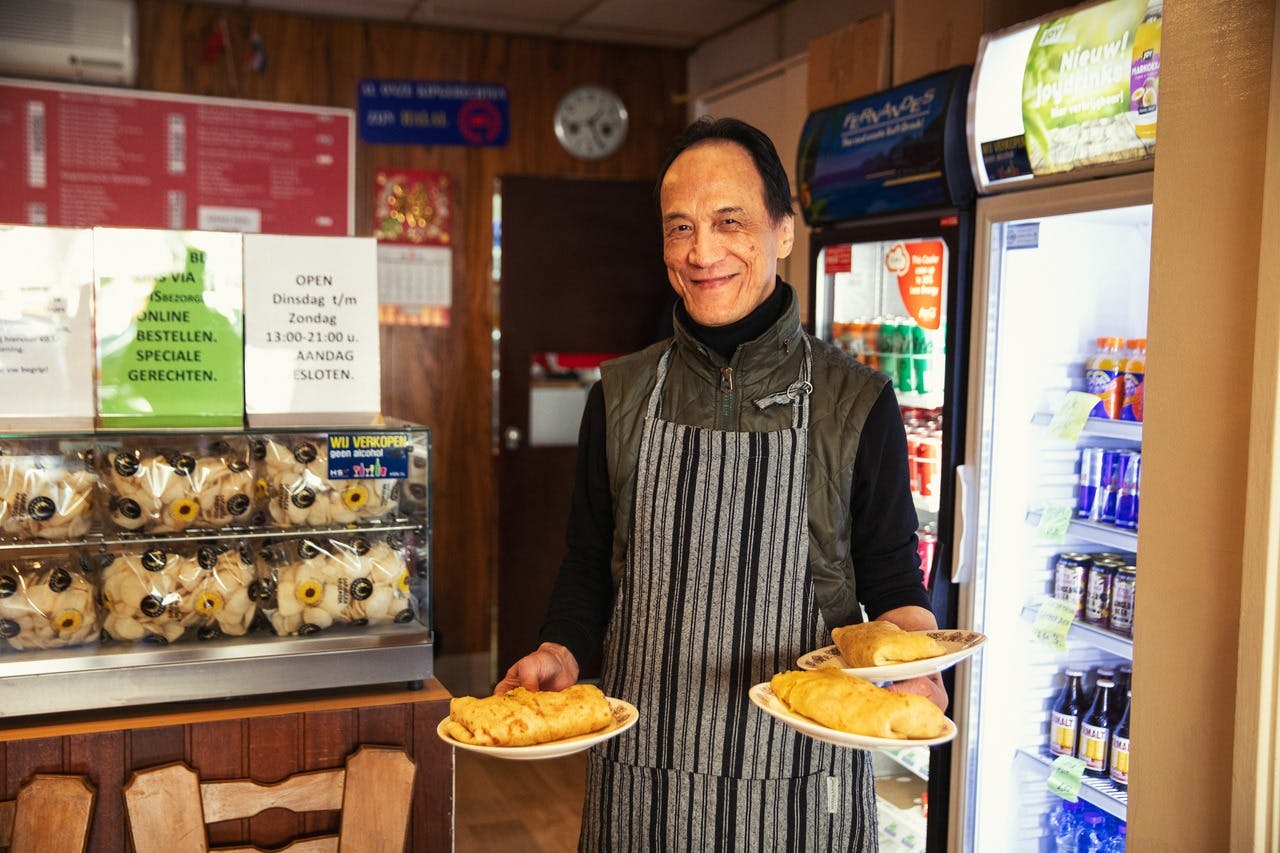
9. Raw Herring (Yes, Really)
I know, I know. Raw fish sounds terrifying. But hear me out – it’s creamy, not fishy. Soften it even more with onions and pickles. There are two ways to eat it. The most classic way is: hold it by the tail, lower it into your mouth. Know the bone is still in there!

In Amsterdam they eat it simpler (without the bone). Filleted and cut into bite size pieces. If you want to eat it by the tail you need to ask upfront before they remove the bone, and cut it. Raw onions and sweet pickles are always optional, and a big local discussion if you should your herring with or without. I say with.
Find any fish stand in Amsterdam and look for the sign “Hollandse Nieuwe.” The food tour above, also lets you sample real herring!
More Savory Dutch Food Classics
Beyond the big three, there are plenty of other traditional Dutch foods worth trying:
- Erwtensoep (split pea soup) – thick, hearty winter soup that’s almost a meal by itself. HEMA serves a surprisingly good version (winter time only).
- Uitsmijter – fried eggs (sunny side up) on bread with ham and cheese. Perfect Dutch lunch. Order 12-uurtje to get in combined with a kroket and a soup.
- Vlammetjes – another café snack, similar to bitterballen but different shape, no ragout, and much spicier.
- Bal Gehakt – minced meat with crispy bread and spices. Nobody makes it like Dutch grandmothers.
- Saucijzenbroodje – puff pastry filled with minced meat. Bakery staple. Ask for it warm (this food tour includes it)
- Kibbeling – bite-sized fried fish pieces. Get them from a fish stand with their recommended sauce
- HEMA worst – the best smoked sausage in the world, get it plain warm from the HEMA snack corner
- Borrelnootjes – peanuts wrapped in fried dough with spices. You’ll see these at every Dutch birthday party, and they’re dangerously addictive. You can buy them from the snack isle in every supermarket, next to chips (crisps).
- Poffertjes (tiny pancakes with butter and powdered sugar, or get the adult version with rum or orange liquor)

Sweet Foods We’re Obsessed With
We eat a lot of cookies. Like, a lot. The cookie aisle in our supermarkets is as big as your soda section.
Traditional Cookies:
- Stroopwafels (remember fresh from markets are the best, from a market get those with Roomboter)
- Speculaas (spiced cookies that taste like Christmas)
- Gevulde koeken (filled cookies)
- Spakenburgs hart (heart-shaped spiced cookies) – Harder to find, but if you do it’s such a treat
- Jodekoeken (spiced cookies, really good, look for the box with the purple lid)
- Spritsen (butter cookies)
- Krakelingen (twisted cookies)
- Bastogne koeken (there is just something special about these cookies)
- Mergpijpen (bone marrow-shaped pastries filled with cake, cream and jam)
- Bokkepoten (goat feet cookies, weird name, but oh my god SO delicious, just the sounds of the crunch)
- Bitterkoekjes (almond cookies with a bitter flavor, rich, different, good)
Pastries:
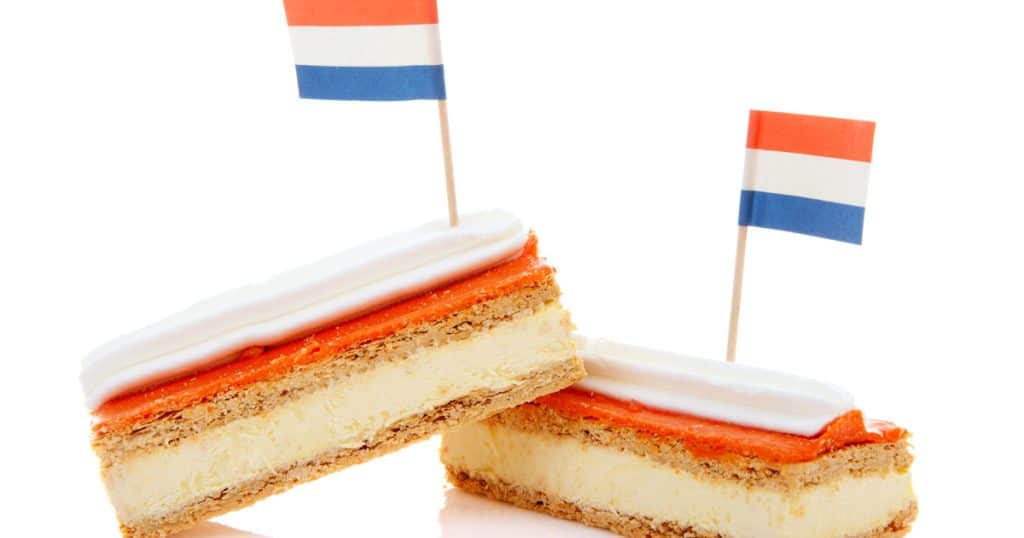
- Tompouce – puff pastry with custard and sweet glaze (HEMA sells a cheap version every Dutch person secretly loves)
- Slagroom taart – light, airy whipped cream cake
- Mokka taart – coffee-flavored pie
- Dutch Apple Pie – layers of cinnamon-marinated apples (great pie at Winkel 43, but long lines)
- Bossche Bollen – chocolate sphere with whipped cream (only authentic at Jan de Groot bakery in Den Bosch)
- Limburgse Vlaai – iconic southern Dutch pie in many flavors (best to get Vlaai in Maastricht, a great day trip)
Dutch Candy:
- Hopjes (coffee-flavored hard candy)
- Spekjes (soft sugared marshmallows with unique flavor)
- Drop (licorice – start with plain salted, save double salted salmiak for last, thats hardcore Dutch)
- Koetjes repen (chocolate bars, not great chocolate, but every Dutch person’s childhood memory)
- Tony Chocolonely (this GOOD chocolate, ethical chocolate bars in the best flavors, a great gift)
- Boterbabbelaars (butter candy)
- Zuurstokken (sour hard candy poles)
- Kaneelstokjes (cinnamon candy)
Desserts:
- Vla (dairy dessert thinner than pudding – try dubbelvla with two flavors, only at supermarkets)
- Advocaat (thick eggnog with alcohol – try Tokkelroom brand from Supermarkets, or even better, if you are lucky to find traditionally made a food hall, or speciality store get that. You recognize them from a cloth around the lid)
Seasonal Treats
Easter: Chocolate eggs in every flavor imaginable. Supermarkets in March and April overflow with them – you can mix and match.

Sinterklaas (December): The jackpot season for Dutch sweets (hit stores and bakeries as early as October):
- Marsepein (almonds and sugar shaped into figures)
- Pepernoten (medium ginger spiced cookies)
- Kruidnoten (crispy cookies, often confused with pepernoten, and truly addictive)
- Chocolate letters (personalized chocolate gifts)
- Borstplaat (pure sugar and butter candy)
- Amandelstaaf (puff pastry with almond paste – heat before eating for best flavor)
- Strooigoed (candy mix thrown during celebrations, big bags in Supermarket)
New Year: Oliebollen (fried dough balls with powdered sugar that should leave your coat completely white) and Krentebollen (same but with raisins). Also, popular on New Years Eve in Dutch homes, are apple beignets and turnovers.
Frequently Asked Questions about Traditional Dutch Foods
Will I be ok as a vegan in the Netherlands?
If you want to try the Dutch classics, they rarely will be vegan. Most Dutch classics contain milk, eggs, or other animal derivatives. But you won’t go hungry if you are vegan.
Especially recently, many vegan restaurants popped up. The supermarkets now cater to the vegan consumer, as well. It’s a movement growing here, too, especially with younger people.
Plenty of options will be available for you, whatever your food preference is—just a bit less of the classics.
What are your top 3 Dutch food picks to try?
Oh, that’s simple. 1. Bitterballen, nothing beats a break with bitterballen served with mustard (make sure to wait until they’re cooled down enough). 2. A real Stroopwafel, once freshly prepared, that is still hot. Nothing beats the yummy smells and the warm syrup inside. 3. A Halve Rookworst from HEMA (served hot), the best-smoked sausage I know. I won’t go with herring or Salmiak drop. I’m nice.
How to eat fries the Dutch way?
The Dutch love to eat their fries with mayonnaise or peanut sauce (satay sauce). If you ask for a “Patatje Oorlog,” which means war fries, you get mayo, peanut sauce, and onions. Another frequent request is “Patatje Speciaal.” The next question from the server is, then, Ketchup or Curry? Most Dutch choose Curry. You then get mayo, a spicy curry sauce, and fresh onions on top of your fries.
Food Rules You Should Not Forget
Here a few reminders, and new rules to know before you come to become more Dutch:
- So Fries come with mayo, not ketchup (or peanut sauce, or both – also delicious)
- Pancakes are lunch/dinner food, never breakfast
- Raw herring technique: hold by the tail, lower into your mouth whole (but ask to get in whole in Amsterdam)
- In this country you find limited breakfast options outside tourist restaurants and hotels
- Chocolate sprinkles (hagelslag) on buttered bread = legitimate way to eat chocolate for breakfast
- “Healthy” breakfast foods like beschuit and ontbijtkoek are one-third sugar (but we call them healthy because they’re whole wheat)
More Dutch Culture
Here are more of Dutch Culture articles if enjoy learning more about us ?:


