
Amsterdam public transport simplified means: the public transport system in Amsterdam works exceptionally well for visitors. It’s a much better choice then renting a bike, or taking an Uber. But I understand you have many questions about it. So let me help you.
I’ve lived here most of my life and use these trams, metros, and buses all the time. The system will get you everywhere safely and efficiently, which is particularly valuable if you’re not comfortable navigating bike traffic, and don’t get started about travel times in a taxi/uber getting stuck behind a moving van on a small one-way street.
I’ll walk you through how the system works so you can move around Amsterdam with confidence.
Get Your Amsterdam Public Transport Ticket Here:
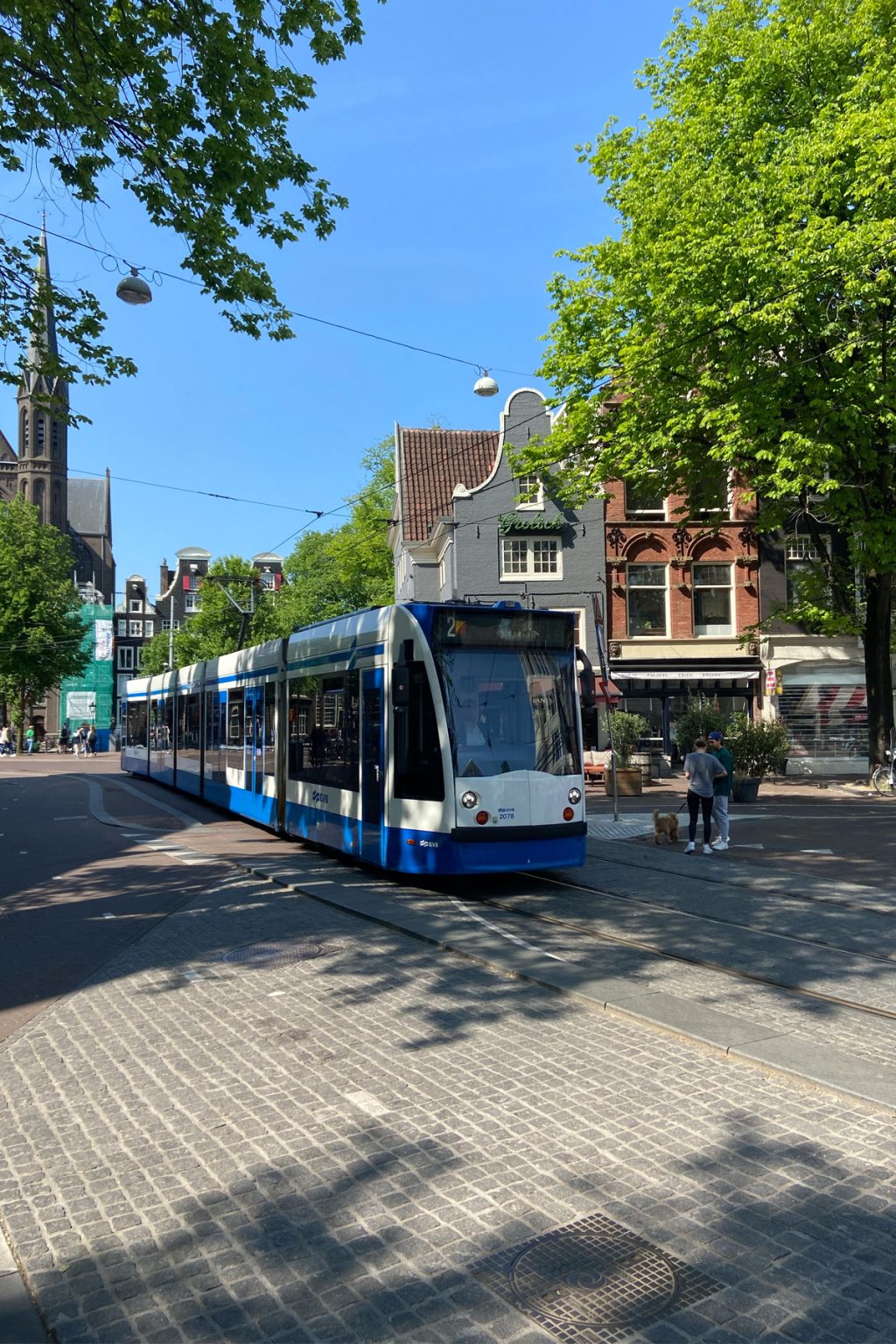
Table of Contents
Amsterdam Public Transport Simplified: Tickets
Let’s start with a warning/advice first because there is a lot of inaccurate information on the internet. Bloggers don’t update their content, or worse it’s AI content without being fact checked: But forget everything you’ve read about OV chipcards and ticket machines. Those are not a thing anymore, especially for visitors: Here’s what works now:
What Ticket do You Need for Amsterdam City Only Travel :
If you want a single journey, nothing more:
Pay Contactless: Tap your debit or credit card or phone (like Apple Pay, or Google Wallet) when you board, tap again when you exit. Done. One card / phone per person. If you use the same card twice your check-in gets cancelled and you risk a fine).
When you plan to take 4 or more trips a day to get around Amsterdam:
You have two great options:
- A day, or multi-day pass: if you take 4 trips or more per day, an unlimited Amsterdam transit pass saves you money. Buy it here.
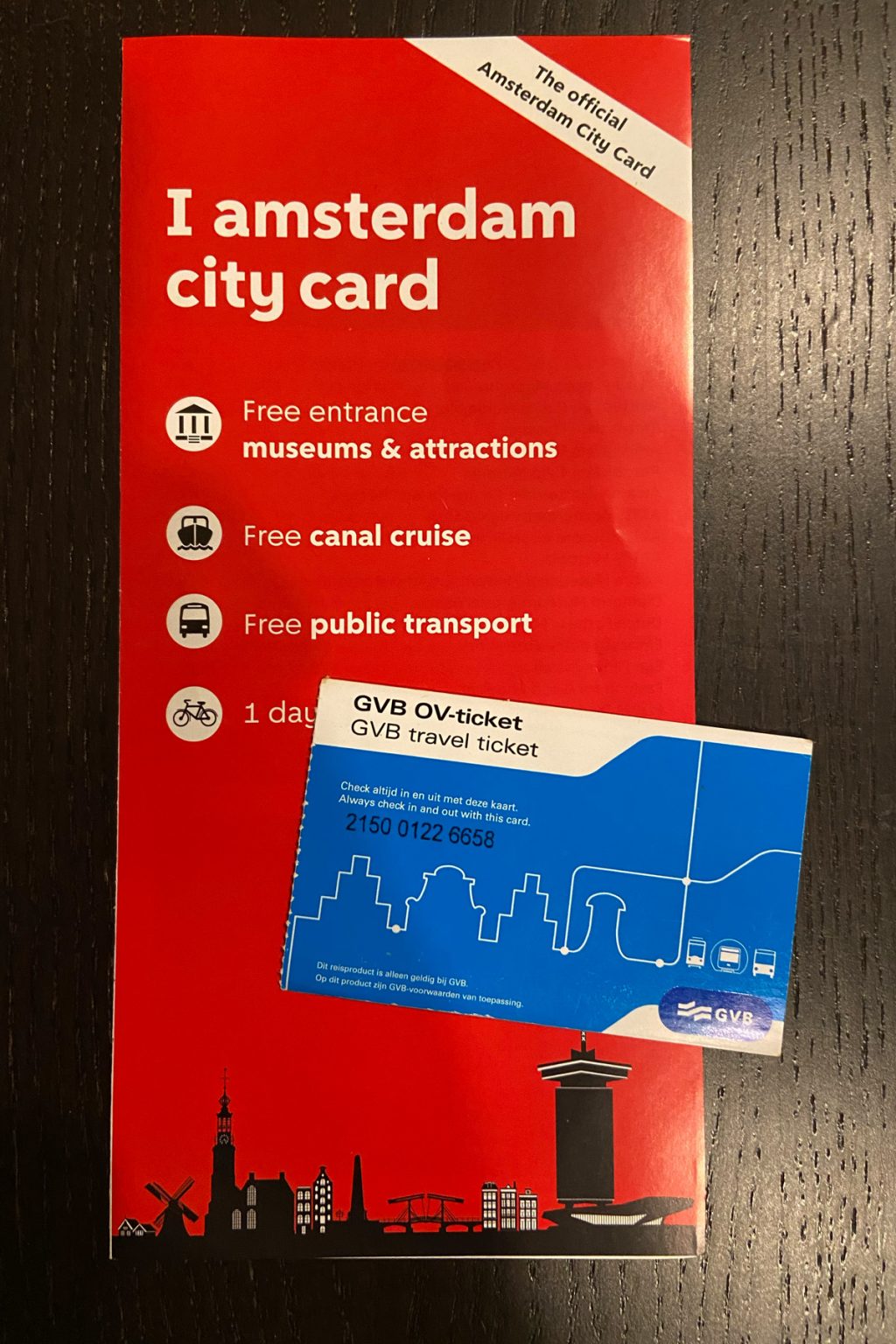
- An “I Amsterdam City Card”: this is a high value city pass that included access to 70+ museums and experiences, including local transit.
Amsterdam’s Best City Card, From €67
Why An I Amsterdam City Card Is A Good Idea
You get free entry to 70+ museums including the Rijksmuseum, and many other activities. Plus free, unlimited use of GVB public transport (bus, tram & metro). It saves visitors money, and you discover places you would otherwise skip.
I recommend buying a multi-day card. Per-day prices become much cheaper. Amsterdam is also chockful with interesting small museums and experiences most visitors never get to see. This pass makes it so easy to discover them.

For City + Airport + Surrounding Towns
- Amsterdam + Region Travel Ticket (ARTT): Covers everything including the train to/from Schiphol Airport and buses to Zaanse Schans, and Volendam. Plus unlimited transportation within Amsterdam on all modes of transport.
The price difference between city-only and regional passes is minimal. If you plan to use the train to and from the airport, and some day trips in the surrounding area, this regional transit pass is a bargain.

Using Your Tickets: The Right Way
Contactless cards/phones: Tap the front of the reader when boarding, tap again when exiting. If you are in doubt line up behind a local when boarding and look what they’re doing. Staff can also help you. If you use the metro you tap your card at the entry barrier, there is a light glass on the right and you tap that. Look how others do it. Make sure you tap out when leaving or you’ll pay the maximum fare.
QR codes (I Amsterdam Card and (Multi)Day Passes) : Scan at the BOTTOM of the machine where you see the red light, not the front like contactless cards. Set your phone to the brightest setting, and have the QR code open before you board or exit. There is no time to fumble with your phone after you get on, or when you want to exit.
I tested this myself – the QR readers work poorly in trams (about 4 out of 10 attempts succeed). If that happens to you just show your card to the driver when scanning fails. When exiting don’t worry about, just leave (but ONLY with a QR code).

Why Amsterdam Public Transport Beats All Other Transportation
The city designed this system for efficiency. Trams run every few minutes, the metro is faster than anything, and ferries are completely free.
Its also much faster than cars (thus also Ubers) because cars are very limited in the city center, often leading to long delays and detours. Especially in the old city center, and the canal belt there is also a very high risk to get stuck behind a delivery van or moving truck and it can take a long time before you move again.
Most importantly: it’s public transport is comfortable, (usually) predictable, and you won’t arrive at your destination with long unexpected delays which can easily happen if you choose to travel with a taxi/Uber.
Many visitors consider biking in Amsterdam. But I recommend against it for city travel.
Amsterdam’s bike infrastructure is built for locals who’ve cycled these streets since childhood. The bike lanes move fast, and experienced riders won’t slow down for tourists learning the rules.
Tram tracks also create a real hazard for tourists – you might not think about this, but bicycle tires fit perfectly between the rails, causing serious accidents when wheels get caught. This happens to tourists on a regular basis.
When cycling is a great idea: Outside the city (like to Zaanse Schans) or on guided bike tours in Amsterdam like this local one where the group leader handles navigation and keeps everyone safe.
Tour Amsterdam By Bike Safely
2-Hour Amsterdam Bike Tour
See Amsterdam safely by bike with a knowledgeable local guide (English and Dutch) and see the best of the city.
Reserve Now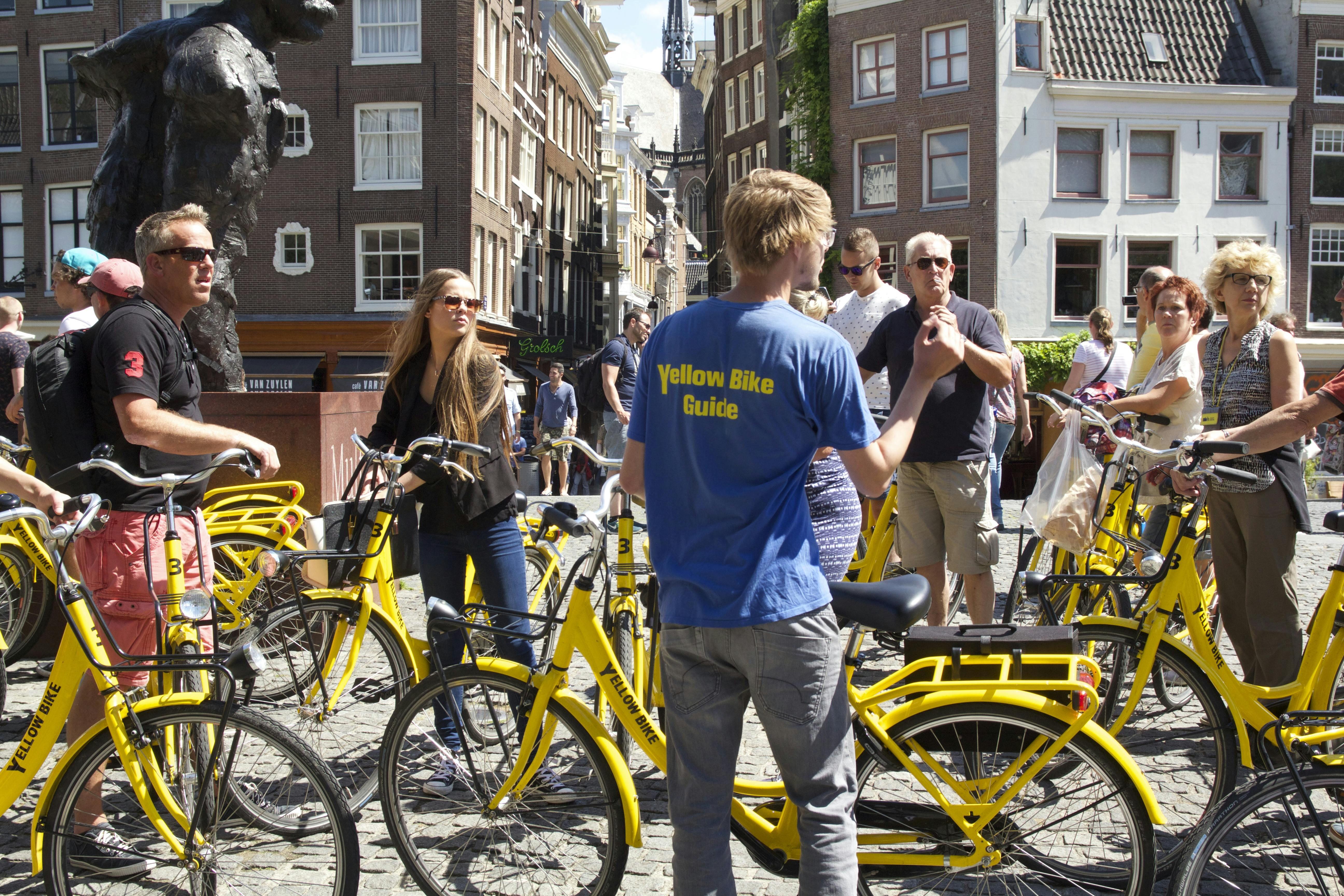
Skip the tourist traps.
See the real Netherlands.
Plan your trip step by step, with practical tips landing in your inbox right when you need them. Save time, and skip the mistakes.
Three Modes Of Amsterdam Transportation That Are Most Useful For Tourists
Trams: Your Main Transportation
For 90% of your Amsterdam visits, you’ll use trams. The network reaches every attraction you care about.

Key tram stops for travelers:
- Dam Square (lines 2, 4, 12, 13, 14, 17, 24) – Royal Palace, Anne Frank area
- Museumplein (lines 2, 5, 12) – Rijksmuseum, Van Gogh Museum
- Leidseplein (lines 2, 12) – Restaurant district, nightlife
- Koningsplein (lines 2, 12) – Flower Market
Take line 2 or 12 from Central Station to hit most major attractions in sequence.
⤷ Here is my complete article on Amsterdam Trams
Metro: Faster and Underused
The newest M52 North-South line is your express route across the city. Something most tourist do not know or use.

Use it for:
- Rokin – Rembrandtplein, Flower Market, Begijnhof
- Vijzelgracht – Heineken Experience, Rijksmuseum
- De Pijp – Albert Cuyp Market, local neighborhood restaurants
- RAI – Convention Center, also home to some great hotels like nHOW and Van der Valk
- Zuid – For the train to the Airport and the fast train to Rotterdam
The metro runs underground, so you miss the scenery but save a lot of time compared to trams. A metro journey just takes a few minutes.
⤷ Here my complete guide on the Amsterdam Metro
Free Ferries: The Secret Locals Know
Two ferry routes from Central Station are worth your time:

- Buiksloterweg 5-minutes: ADAM Lookout, “This is Holland” (included in the I Amsterdam City Pass)
- NDSM Wharf 15-minutes – Street Art Museum, trendy restaurants, pancake boat
I find the NDSM ferry especially a scenic ride, and it’s completely free. It’s a attractions on it’s own. Boat ferries leave from the North exit of Central station (it’s signposted).
Safety and Practical Tips
Amsterdam public transport is safer than most major cities. No homeless issues since tickets are actively checked. But of course this is a big city just like any others. So always be aware of your surroundings and hold on to your luggage.
Watch for pickpockets. Keep phones and wallets secure when trams are crowded. I see often that tourists especially let their guards down and wallet sticking half way out of a back pocket, cameras loosely attached, or just put on top of a bag. That is a very easy target for pickpockets and they take advantage of that. So don’t let that be you.
Press the “Stop” button right after the stop before yours, or trams won’t stop at your destination.
Areas to avoid at night: Amsterdam West and Zuidoost (Bijlmer) – both residential areas that you normally won’t visit anyway.
Kids: Ages 4-11 pay reduced fare, under 4 ride free, 12+ pay full price. Low-floor entry makes strollers easy.
Accessibility: All vehicles have wheelchair low floor access and priority seating. Metro stations have elevators.
Night Transport Options
Everything runs until 12:30 AM. After that:
- Night buses cover main routes (more expensive)
- M52 metro runs all night
- Free ferries continue 24/7
- Airport Express bus 397 and trains run around the clock
During the night I recommend taking a taxi or Uber to get back to your destination. Traffic is low so delays during the day are less likely. If you pre-book your taxi here you pay less then a metered journey.
Taxis and Uber: When to Use Them
Official taxis only: Blue license plates, these always metered. Yellow plates are not legal taxis – avoid them completely when hailing them on the street. You can also pre-book your taxi here to safe on the fare, if you pre-book it does not matter what color the license plate has.
Airport transfers: Expect €60-85 each way. Book private transfers in advance for better rates and guaranteed service. The official taxi waiting rank is outside, so not great with bad weather. If you pre-book your driver is waiting. I recommend taking a taxi when you travel with luggage, or just arrived after a long flight.
Uber works but costs the same as taxis since drivers must be licensed professionals. At the airport the pickup area is at a remote corner. I prefer pre-booking a taxi myself.
Amsterdam Transit Planning Tools To Plan Your Routes
Google Maps works perfectly for Amsterdam public transport. It shows real-time arrivals, delays, and alternative routes. Apple Maps is a good alternative.
Skip the GVB app – it’s clunky and unnecessary when Google Maps does everything better.
One thing is very important a good European SIM card so avoid high roaming costs, or these expensive $10/day plans they sell in the US. I recommend getting a eSIM card suitable for most phones.
Quick Reference for Popular Destinations
- Anne Frank House: Tram 13, 17 to Westermarkt
- Rijksmuseum: Tram 2, 5, 12 to Museumplein or Metro M52 to Vijzelgracht
- Van Gogh Museum: Tram 2, 5, 12 to Museumplein
- Red Light District: Walking distance from Central Station
- Jordaan: Tram 3 to Nieuwe Willemsstraat
Amsterdam Public Transport Map
The Amsterdam GVB website offers a detailed tram map. Just click the image to go to the GVB website.

Frequently Asked Questions Amsterdam Transportation Simplified
Can I use my US credit card on Amsterdam public transport?
Yes, any contactless-enabled credit or debit card works perfectly as long as it is a Visa or Mastercard. Tap to board, tap to exit. Each person should have a different card, you can not share. You can also use Apple Pay or Google Wallet. Your bank handles the currency conversion (which is almost always more expensive than if using a travel debit card like Wise, what I use).
Is the I Amsterdam City Card worth it for transportation?
Only if you’re also planning on visiting 3+ included museums or experienes like a free canal cruise or visiting the A’dam Tower, or This is Holland the “I Amsterdam City Card” is worth the money. Read more about here. The QR scanner reliability is poor on trams, though it works fine at metro stations. If you have problems scanning your card show it to staff on the tram. Buy separate transport passes if you don’t plan a lot of activities.
How do I get from Schiphol Airport to my hotel using public transport?
Take the train from Schiphol to Amsterdam Central (15 minutes), then use tram or metro to your hotel. Buy the Amsterdam + Region Travel Ticket to cover the entire journey. You can also take bus 397 if you’re staying in the museum quarter.
What happens if I forget to tap out with my contactless card?
You’ll be charged the maximum fare for that transport type. Always remember to tap out – it’s how the system calculates your actual journey cost. You can contact GVB customer service, or OVpay customer service to get the difference refunded. But for local Amsterdam journeys they maximum charge is €4. So it’s not worth it usually to go through the hassling €2 or so refunded.
Are Amsterdam’s trams and metros accessible for wheelchairs and mobility scooters?
Yes, all vehicles have low-floor access and designated wheelchair spaces. Metro stations have elevators. Wheelchairs have priority over strollers in designated areas. Some older trams might still have stairs but they become less and less. The tourist lines all run modern vehicles.
Bottom Line
Amsterdam transportation simplified means using what works: trams for sightseeing, metro for speed, and your contactless card for payments or day pass, the ARTT ticket is great for Amsterdam + Regional travel. Skip the bike rental drama and enjoy a stress-free visit to one of Europe’s most walkable cities.
And remember the I Amsterdam City Card includes local transportion. The Card is great if plan to visit many museums, but the Van Gogh or Anne Frank House are not included in the card.


Hi,
My husband and I are planning to visit Amsterdam at the end of April. We will arrive in Sloterdijk Station. We’re planning to visit Keufenhof Garden and Rotterdam. I am confused which ticket should we buy, if it’s GVB Travel Pass or should I proceed with ARTT.
I just wanna know also if I could use ARTT with Intercity and Sprinter Trains and if it’s valid going to Rotterdam as well.
Thank you.
Hi there, I get you’re confused:
GVB = Amsterdam only, no trains.
ARTT = Amsterdam Region including trains. That means All Amsterdam transport including GVB but als Keukenhof, Airport trains, also to Sloterdijk, Zaanse Schans and places like Volendam.
Rotterdam is too far. That is not regional anymore and you need a separate individual train ticket. Which you can get here.
The ARTT ticket includes transportion to the city center by train (sprinter and regular). But also trams et cetera. Keukenhof transport is also included. But you do need a separate Keukenhof entrance ticket.
This is general advice without knowing your exact plans and schedule, for personalised advice you can book a consultation call with me, that will then be all about you and your trip and we can look at the trips you’re making and what makes the most sense, plus other tips and optimizations to your plans. I can not get that personal in the comments section. I hope you understand, and the above is still helpful to you. Gerrit